


ArticlesCabin Air Filters in Texas Heat: Why Your AC Breaks Down
Your car’s air conditioning feels weaker than it did last summer. The vents blow, but the airflow is sluggish. You crank the fan to max and hear the blower motor working harder, but the cabin barely cools. You chalk it up to the Texas heat. But the real culprit is probably sitting behind your dashboard, clogged with weeks’ worth of pollen, dust, and mold.
That’s your cabin air filter. In Texas, filters are exposed to far more pollen, dust, and debris than in many other parts of the country, causing them to clog much sooner.
In this guide, we’ll explain why Texas conditions cause cabin air filters to clog sooner, the warning signs to watch for, and why routine inspection during an oil change service helps prevent it from being overlooked.
Why Texas Conditions Clog Cabin Air Filters Faster
Cabin air filters are designed to trap dust, pollen, road debris, and other contaminants before they reach the passenger cabin. In normal climates, they last 12,000 to 15,000 miles. In Texas, that timeline compresses dramatically.
Cedar Fever Creates Sticky, Aggressive Pollen
Texas cedar (actually mountain juniper) releases massive pollen loads from December through February, particularly in Central Texas regions like Boerne, Spring Branch, and Canyon Lake. Unlike typical spring pollen, cedar pollen grains are sticky and large, and they clog standard cabin air filters significantly faster than lighter northern tree pollen.
Mechanics in North Texas report that drivers living in high-cedar areas may need more frequent inspections and, in some cases, monthly replacement during peak cedar pollen season. For drivers in cedar-heavy areas, inspecting the filter every 2–3 weeks during peak season helps maintain airflow and cabin air quality.
Spring Oak and Pecan Pollen Arrives Early
Texas’s spring pollen season begins in February (earlier than most states) and extends through April. Oak and pecan trees blanket Central and East Texas with heavy pollen loads. Combined with construction dust from ongoing highway expansion, spring pollen clogs filters faster than any other season.
Summer Brings Dust + Heat Amplification
Summer heat intensifies AC demand. Drivers run their air conditioning constantly (sometimes for 6+ months straight). This continuous cycling forces more air through the cabin filter. Summer also brings heavy traffic on highways like the Dallas North Tollway and highway construction zones that pump concrete dust and gravel directly into vehicle air intakes. Filters loaded during spring become severely clogged by mid-summer.
Fall Ragweed and Leaf Debris
Autumn introduces ragweed pollen and fallen leaves that find their way into intake vents. Trees shedding leaves near parked vehicles mean filters collect debris even when the car isn’t running.
Texas Humidity Creates Year-Round Mold
Unlike dry climates, where filters clog with particles alone, Texas humidity creates a unique problem: mold and mildew growth on clogged cabin air filters. As humidity combines with trapped organic material (pollen, leaves, dust), it creates ideal breeding conditions for mold. The result is musty or mildew-like odors, indicating the filter needs immediate replacement.
Recommended Replacement Intervals for Texas Drivers
Manufacturer recommendations (12,000-15,000 miles) assume normal conditions. For Texas drivers in heavy traffic, construction zones, or high-pollen areas, which describes most metro commutes from Houston to Dallas to Austin, replacement should happen every 8,000 to 10,000 miles. During cedar season or if you park under trees, inspection every 5,000 miles is wise.
How a Clogged Cabin Filter Reduces AC Performance
A cabin air filter sits in your AC system, usually behind the glove box or under the dashboard. As dirt and debris build up, airflow becomes increasingly restricted, affecting both cabin comfort and AC efficiency.
The Blower Motor Fights Against Resistance
When airflow is restricted, the AC blower fan must work harder to push air through the clogged filter. You notice this as:
- A louder, whining, or hollow whirring blower motor (even at low fan speeds)
- Weak AC output despite high fan settings
- Strain sounds when turning on the AC
The blower motor isn’t designed for sustained resistance. In Texas summers, when air conditioning runs nonstop for months, this continuous strain accelerates motor wear. What should last 100,000+ miles may burn out sooner.
Reduced Cooling Performance
Reduced airflow across the evaporator coil means cooled air cannot circulate through the cabin as efficiently, so the AC often has to run longer to reach the desired temperature. In extreme cases, severely restricted airflow can cause the evaporator coil to freeze solid, disrupting your entire cooling cycle and forcing the system to repeatedly cycle off and on.
Running the air conditioning system for longer periods may slightly increase fuel consumption while placing additional demand on AC components over time.
Mold Growth on the Evaporator Coil
Texas humidity compounds the problem. As moisture-laden air passes through the clogged cabin filter and into the evaporator coil (a dark, damp component behind your dashboard), mold and mildew thrive. Mold can affect cabin air quality and produce unpleasant odors.
Cleaning a mold-infected evaporator requires antimicrobial spray treatment ($100-$200). Replacing a severely damaged evaporator coil runs $800-$1,200 because it requires removing the dashboard.
The Silent Warnings Your Cabin Filter is Clogged
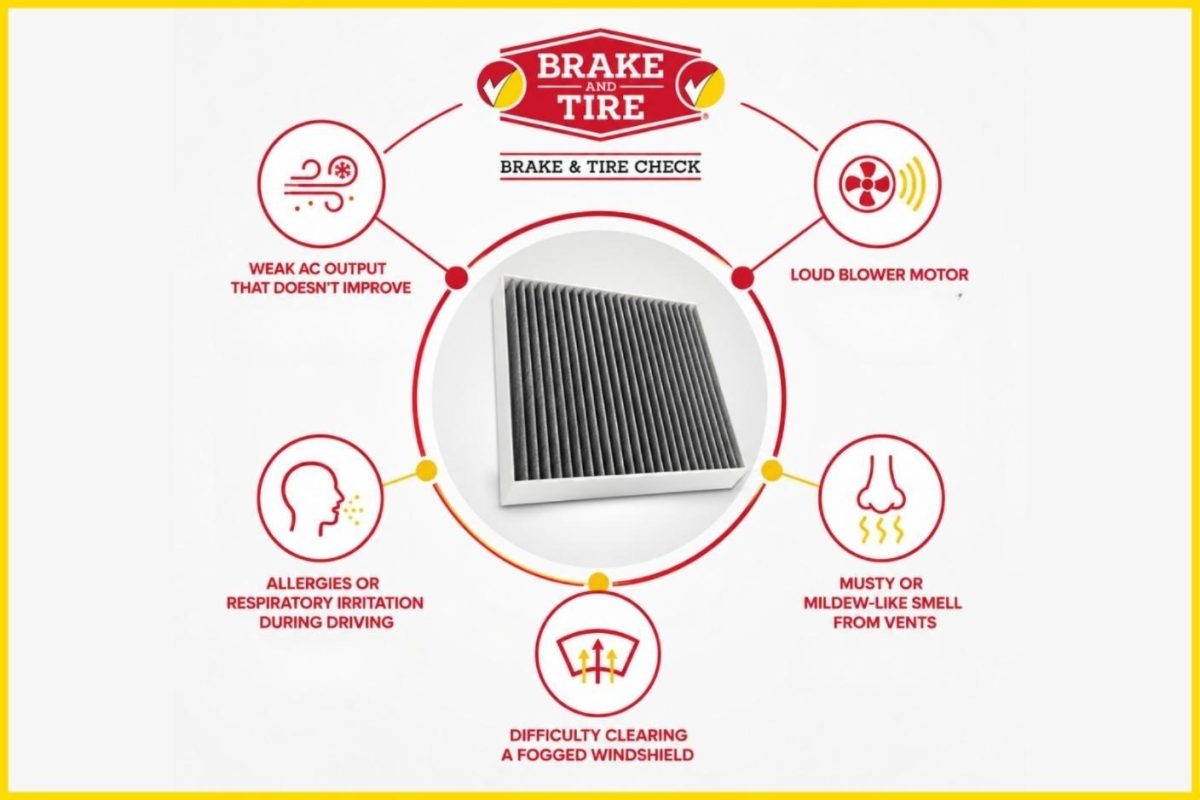
By the time you feel the effects, your AC has been struggling for weeks.
- Weak AC output that doesn’t improve: You turn on the AC and feel cool air, but it’s noticeably weaker than it was last year. Even at maximum fan speed, airflow feels restricted.
- Loud blower motor: The fan sounds like it’s working hard or making a hollow whirring sound, even when you set it to low. It may make a whining or squealing noise when you first turn it on.
- Musty or mildew-like smell from vents: Persistent odors often indicate excessive moisture or mold buildup within the AC system and should be inspected promptly.
- Difficulty clearing a fogged windshield: Weak cabin airflow means the defroster can’t quickly clear moisture from the windshield. In Texas humidity, this is both uncomfortable and a safety issue.
- Allergies or respiratory irritation during driving: A clogged cabin filter no longer traps pollen and dust effectively. Particles bypass the filter and circulate in the cabin. Drivers with allergies or asthma report worsening symptoms such as sneezing, itching, or difficulty breathing during commutes.
Why Professional Inspection During Oil Changes Matters
Replacing a cabin air filter is simpler than replacing an engine air filter; most filters take 5-10 minutes and are accessible without special tools. But convenience isn’t the only reason to bundle this service with your oil change.
Professional Technicians Spot System Issues You Can’t
When a technician inspects your cabin filter, they also check:
- Filter housing for cracks or loose seals (improper sealing allows unfiltered air to bypass the filter)
- Blower motor for unusual noise or strain
- Evaporator area for mold growth or moisture damage
- Airflow performance to identify restrictions
Identifying these issues early can help prevent additional wear on AC components and reduce the likelihood of more expensive repairs later.
Cabin Filter Replacement Cost
Cabin air filter replacement: $30-$75 professionally ($15-$20 for the part, $15-$55 labor depending on accessibility).
DIY replacement saves labor but risks missing critical warning signs that require professional diagnosis.
Let Brake and Tire Check Experts Handle It For You
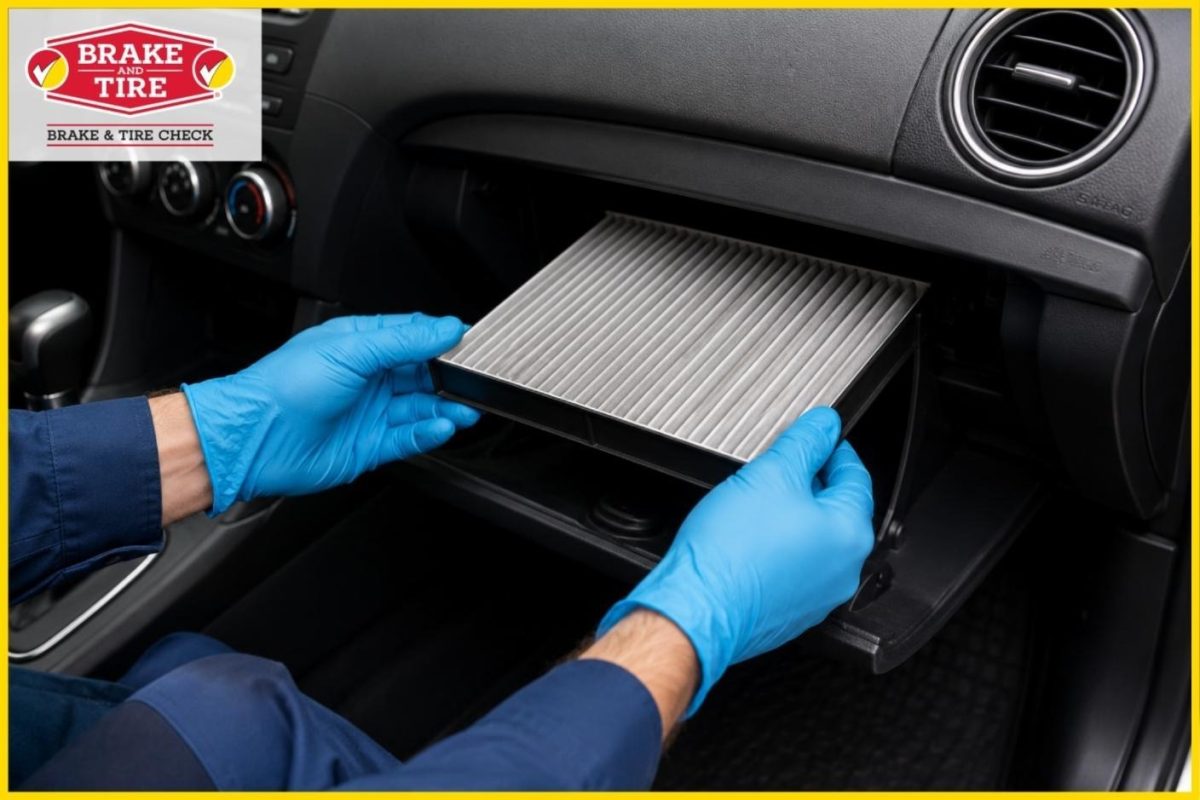
Both your engine air filter and cabin air filter play an important role in keeping your vehicle performing efficiently and comfortably. Inspecting both during routine oil changes makes preventive maintenance much easier.
At Brake and Tire Check, we inspect your cabin air filter, identify airflow issues, and help keep your air conditioning system performing efficiently through Texas heat. We check the filter’s condition, look for mold growth, verify the housing is sealed properly, and replace the filter if needed, all in one visit.
Schedule your next oil change and cabin air filter inspection at Brake and Tire Check. With locations across major Texas cities, expert service is never far away. Find your nearest tire shop today.
© 2026 Peveto Companies Ltd. All Rights Reserved.
Sitemap | Accessibility Statement