


ArticlesTire Tread Depth and Patterns Explained for Texas Drivers
| Key Takeaways for Texas Drivers – Tire tread depth below 4/32 inch significantly increases hydroplaning risk on Texas highways. – The penny test shows the legal minimum, but the quarter test is safer for Texas rain and speed conditions. – Symmetrical, asymmetrical, and directional tread patterns each perform differently in wet and dry driving. – Tread patterns lose effectiveness as depth wears down, even if the design is advanced. – Regular tire rotation and proper inflation help extend tread life in Texas heat. |
Maintaining proper tire tread is crucial for your safety on Texas roads. At Brake and Tire Check, we help drivers understand tire tread depth and patterns so you can drive safely and know exactly when it’s time for new tires.
This guide shows you how to check your tread depth, explains what the numbers mean, breaks down the different tread patterns, and provides Texas-specific recommendations for our unique driving conditions.
What Is Tire Tread?
Tire tread is the rubber part of your tire that makes contact with the road. It has two important characteristics:
- Tread Depth – How much rubber is left, measured from the top of the tread to the bottom of the grooves
- Tread Pattern – The design of grooves, channels, and blocks molded into the rubber
Both matter for your safety. Tread depth affects how well your tires grip the road, especially in rain. Tread patterns determine how water is channeled away and how your tires perform in different conditions.
Think of it like shoe soles: the thickness of the sole (depth) and the pattern design both affect traction. Worn-down soles slip more easily, and the wrong pattern won’t grip well on certain surfaces.
How to Check Your Tire Tread Depth
You don’t need expensive tools to check if your tires are safe. Here are two simple methods:
The Penny Test (2/32″ – Legal Minimum)
This is the most common way to check tire tread depth:
Step 1: Take a U.S. penny and hold it with Lincoln’s head upside down
Step 2: Place the penny between two ribs on your tire, inserting it into the tread groove
Step 3: Check various points on the tire, around the circumference and between different ribs, to look for uneven tire wear
Step 4: Look at Lincoln’s head:
• If you can see the top of his head, your tread is at 2/32″ or less – Time to replace immediately
• If his head is partially covered, you still have more than 2/32″ of tread depth
The Quarter Test (4/32″ – Texas Recommended)
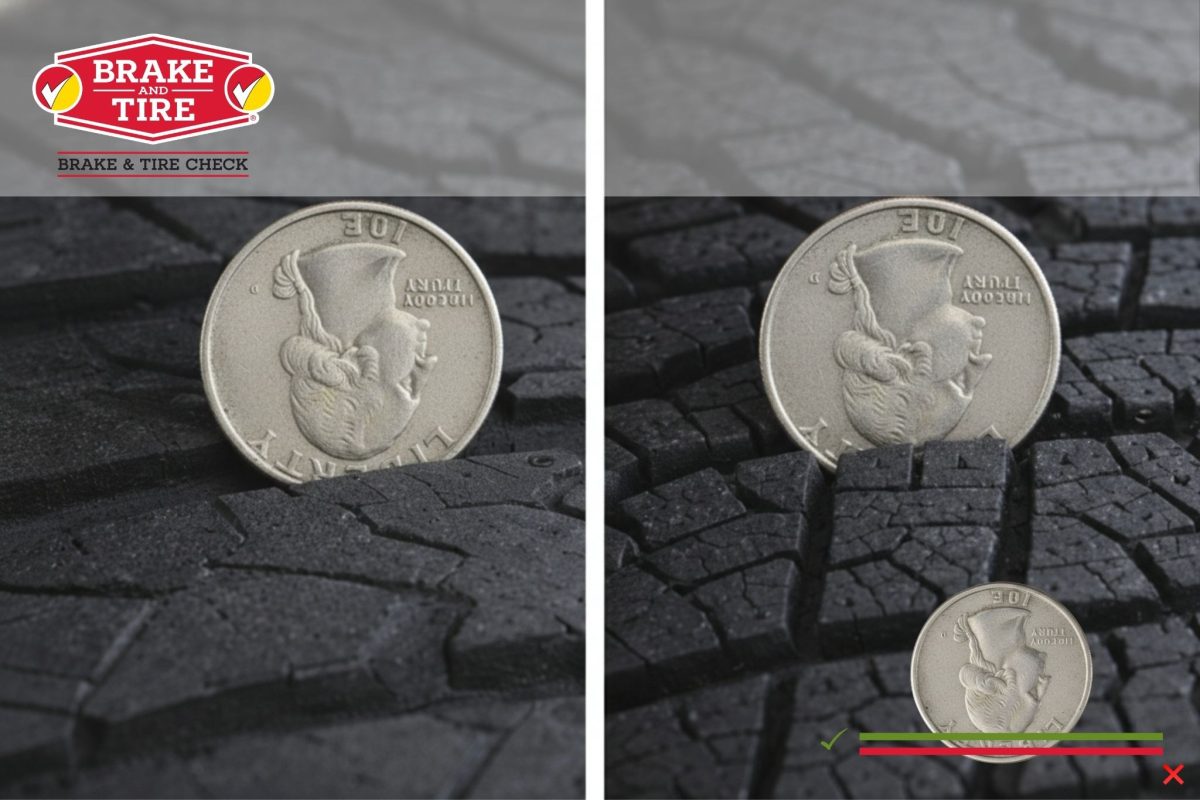
For Texas drivers, we recommend the quarter test instead:
Step 1: Take a U.S. quarter and hold it with Washington’s head upside down
Step 2: Insert it into the tread groove the same way as the penny test
Step 3: Check multiple spots around the tire
Step 4: Look at Washington’s head:
• If you can see the top of his head, your tread is at 4/32″ or less → Time to replace for Texas safety
• If his head is partially covered, you still have adequate tread depth
Why 4/32″ for Texas? In heavy rain at highway speeds, tires worn to 2/32″ can lose grip 40+ feet sooner than tires at 4/32″, that’s more than 3 car lengths of extra stopping distance. With Houston’s flash floods and our 75-80 mph highway speeds, that extra tread depth can be lifesaving.
Tread Wear Indicator Bars
Most tires also have built-in wear indicators, small raised bars located in the grooves between tread blocks. When these bars are flush (even) with the tread surface, your tire is worn to 2/32″ and must be replaced.
Tire Tread Depth Chart
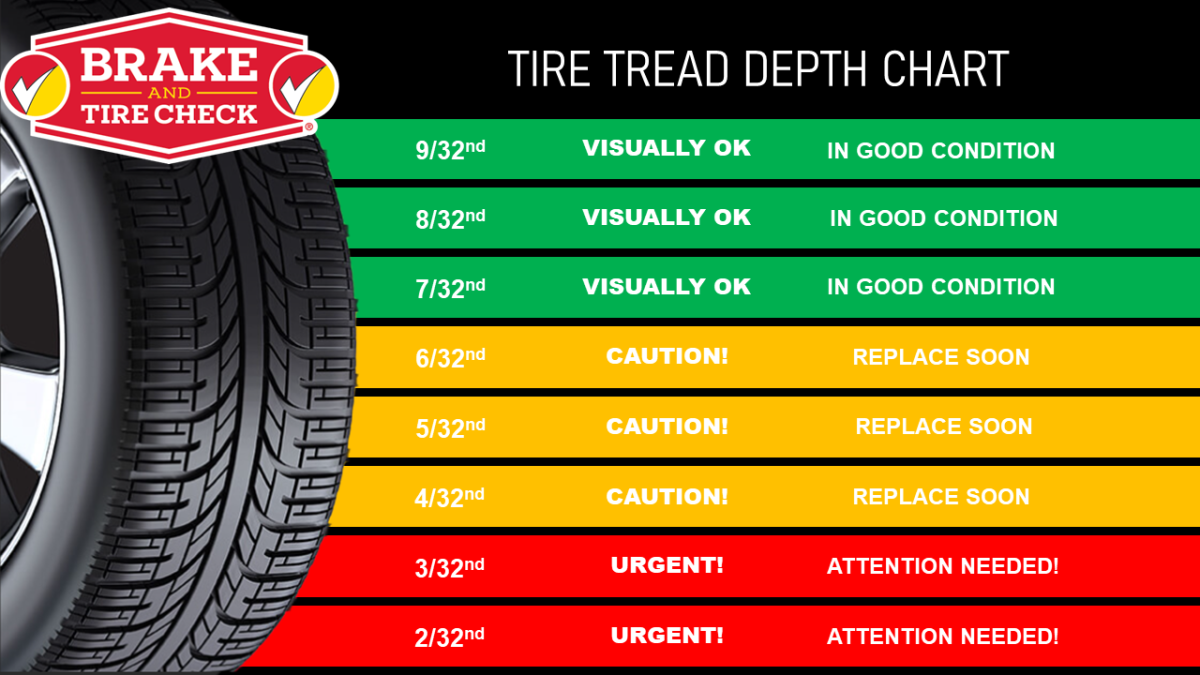
Use this chart to understand what your tire measurements mean:
| Tread Depth | Condition | Action Needed | Rain Performance |
| 10/32″ – 11/32″ | New tire | None – Excellent condition | Best |
| 8/32″ – 9/32″ | Lightly worn | Monitor regularly | Excellent |
| 6/32″ – 7/32″ | Moderate wear | Plan for replacement soon | Good |
| 4/32″ – 5/32″ | Texas replacement point | Replace for safety in rain | Fair – hydroplaning risk |
| 2/32″ – 3/32″ | Legal minimum (unsafe) | Replace immediately | Poor – dangerous in rain |
| Less than 2/32″ | Illegal in most states | Replace NOW | Extremely dangerous |
Understanding Tire Tread Patterns
While tread depth tells you when to replace your tires, tread patterns determine how your tires perform. There are three main types:
Symmetrical Tread Pattern
Symmetrical tread patterns feature the same design across the entire width of the tire. If a line were drawn down the center of the tread, both sides would appear identical. This uniform layout makes symmetrical tires easy to identify. When viewed from above, there are no directional arrows or inside and outside markings on the sidewall, since the tread performs the same way regardless of mounting direction.
Best for:
- Daily commuters and highway driving
- Family sedans, minivans, economy cars
- Drivers who want the longest tire life
Advantages:
- Longest tread life (60,000-80,000 miles)
- Quietest ride
- Can rotate in any direction
- Good balance of performance and longevity
Budget-friendly: Lasts 5-6 years for average drivers (12,000 mi/year)
Asymmetrical Tread Pattern
Asymmetrical tread patterns use different designs on the inner and outer halves of the tire, with each side engineered for a specific purpose. The outer portion typically features larger, more solid tread blocks that improve cornering stability and dry road grip. The inner portion contains additional grooves and channels designed to move water away from the tire more efficiently. Because of this design, asymmetrical tires are marked with clear “INSIDE” and “OUTSIDE” labels on the sidewall and must be mounted correctly to perform as intended.
This tread pattern is designed to balance performance and everyday usability. It allows drivers to benefit from responsive handling on dry roads while maintaining strong traction during rain, which is especially important for mixed Texas driving conditions that include highways, city streets, and sudden storms.
Best for:
- Performance vehicles and sports sedans
- Drivers who want great handling AND wet traction
- Mixed driving (highway, city, rain)
Advantages:
- Excellent in wet AND dry conditions
- Superior cornering ability
Moderate replacement: Lasts 3-4 years for average drivers
Directional Tread Pattern
Directional tread patterns feature a distinct V shaped or arrow like design that is intended to rotate in only one direction. These tires must be mounted so the tread pattern points forward, following the direction arrow molded into the sidewall. The angled grooves are designed to push water outward as the tire rotates, helping clear water from beneath the tire and maintain contact with the road surface.
This design is particularly effective in wet conditions. By actively channeling water away from the center of the tire, directional patterns reduce the risk of hydroplaning and provide greater stability at higher speeds. However, because of their specialized design, rotation options are more limited compared to other tread patterns.
Best for:
- Heavy rainfall areas (Houston, Gulf Coast)
- High-performance driving
- Drivers who prioritize wet-weather safety
Advantages:
- BEST water evacuation and hydroplaning resistance
- Excellent high-speed stability
- Superior wet traction
More frequent replacement: Lasts 2-3 years for average drivers
Tread Pattern Comparison
| Pattern | Best For | Rain Performance | Tire Life | Rotation Options |
| Symmetrical | Daily driving, highway | Good | 60,000-80,000 mi | Any direction |
| Asymmetrical | Performance, all-around | Excellent | 40,000-60,000 mi | Front-back only |
| Directional | Heavy rain, sports | Best | 30,000-50,000 mi | Front-back only |
How Tread Depth and Patterns Work Together
Tread depth and tread pattern cannot be evaluated separately. They work together to maintain traction and stability.
As tread depth decreases, the ability of any tread pattern to evacuate water is reduced. Even the most advanced directional pattern cannot perform effectively when grooves become too shallow.
Symmetrical patterns tend to wear more evenly and retain consistent performance longer. Asymmetrical and directional patterns may lose effectiveness more quickly if not rotated properly or once tread depth drops below safe levels.
In Texas driving conditions, tread patterns begin to lose wet weather effectiveness rapidly once tread depth approaches 4/32”.
When Should You Replace Your Tires?
- Tread depth below recommended levels
- Uneven wear indicating alignment or inflation issues
- Cracks in the tread or sidewall
- Bulges or blisters
- Tire age over 6 years
- Vibration or frequent pressure loss
Tire Maintenance Tips for Longer Tread Life
Follow these tips to maximize your tire tread life:
Check Pressure Monthly
- Underinflation causes edge wear and reduces tread life by 25%
- Overinflation causes center wear
- Check when tires are cold (before driving)
- Texas heat increases pressure, check more frequently in summer
Rotate on Schedule
- Symmetrical tires: Any direction (X-pattern recommended)
- Asymmetrical tires: Front-to-back on same side only
- Directional tires: Front-to-back only, arrow pointing forward
- Rotate every 5,000-7,500 miles
Get Alignment Checked
- Misalignment causes rapid, uneven tread wear
- Check alignment after hitting potholes or curbs
- Signs you need alignment: car pulls to one side, steering wheel off-center
- Should be checked annually
Prioritize Vehicle Safety with Brake and Tire Check
Your tires play a critical role in how safely your vehicle handles Texas heat, rain, and highway driving. If you are unsure about tread wear, tire age, or overall condition, a professional inspection can help you make the right decision before problems arise.
With many locations throughout Texas, Brake and Tire Check makes expert tire care easy and accessible. We offer a wide selection of trusted tire brands to fit different vehicles, driving styles, and budgets. When you purchase tires, you also receive free services such as professional installation, lifetime tire rotations, balancing, and complimentary air pressure checks, helping you protect your investment long after installation.
Visit our tire shop near you for a free tire inspection and expert guidance tailored to Texas driving conditions.
© 2026 Peveto Companies Ltd. All Rights Reserved.
Sitemap | Accessibility Statement